Who said magic doesn't exist? But what about SEO?! When it comes to promoting your business online, just about anything is good. It's time to add a pinch of magic! Why do we call SEO magic? Because as soon as you carry out intelligent technical optimization on the site, traffic will skyrocket!
So, search engines resort to using a variety of factors to rank sites. But few people know the principle by which the position of a particular resource is determined. However, there are some ways that we at INTEC use to make websites friendly to the search engine. They help search robots collect information faster, rationally distribute it into special categories, and rank your resource. Now we will share them with you. Go!
1. Take care to create fresh and quality content
This point is important, as it can significantly increase the position of your site. Fill the resource with unique(!) content and update it. Text information should always be up-to-date, and it should also have a clear connection with your business. Be sure to check your articles for uniqueness with programs that can be found for free, such as Advego Plagiatus or Content Watch.

Content should be fresh. Like a pie
2. Make sure titles are unique
Each page should have its unique title. The optimal length for each heading is 60 characters. It is important that it be meaningful and includes promotional words. Also, the title should reveal the essence of the content of a particular page.
It not only reflects the essence but also serves as a means of drawing attention to the text below. The title text content must be written in the Title meta tag.
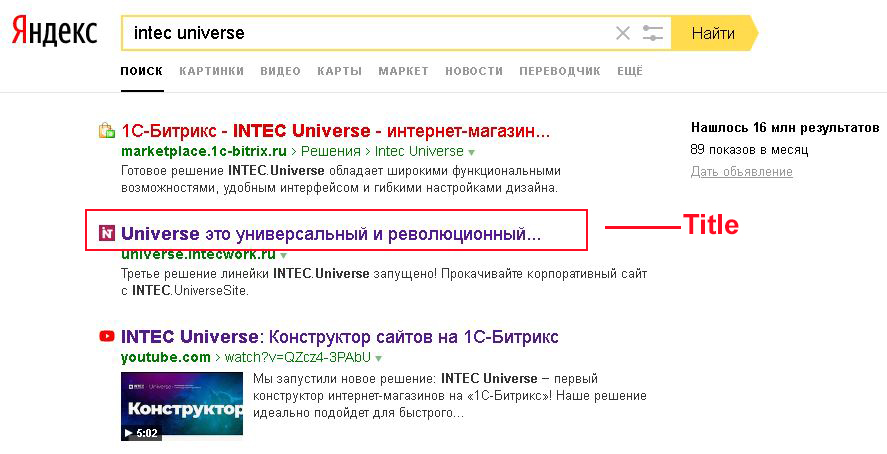
3. Make sure each page contains a description (i.e., Description)
Description should characterize the content of the page. This point is important because the meta tag is visible under each heading in the query's search results. For this reason, the description must be as attractive as possible for the page visitor. Look at this as selling text for your page.
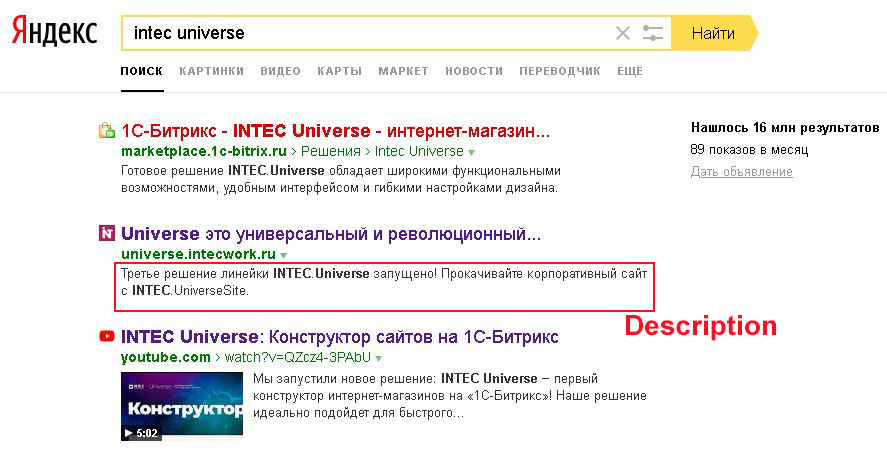
It's important to remember that the Description meta tag must be formed into a snippet.
4. Don't forget to use a tool like URL keywords
The "keys" must always be in the URL. The words in the URL must match the keywords for which you want to optimize your article material or web page. They must be easily readable by both visitors to the site and search robots. For example, if your site is about website development and you have a portfolio page, it makes more sense to put the word "websites development portfolio" in the URL rather than just the word "portfolio."
If your content is titled: "10 Ways to Rank Your Site With SEO Magic"
1.your_domain.com/10-ways-to-rank-your-site-with-seo-magic
2.your_domain.com/10-ways-to-improve-site-ranking-with-seo
These examples indicate that the words in the URL can be the same as the title assigned to the article or include keywords. Both the first and second options will be equally correct.
5. It is important to use heading tags correctly
Title tags structure the information on your resource pages in the right way, thereby creating a clear description of the content that is meaningful for search robots and convenient for visitors.
Don't forget to use the H1 tag for the main text heading on a particular web page. The H2 tag should be used for secondary subheadings. The H3 tag is needed to indicate subheadings of the next, third level. Keep in mind that you can only have one H1 tag per page. Keep an eye on it.
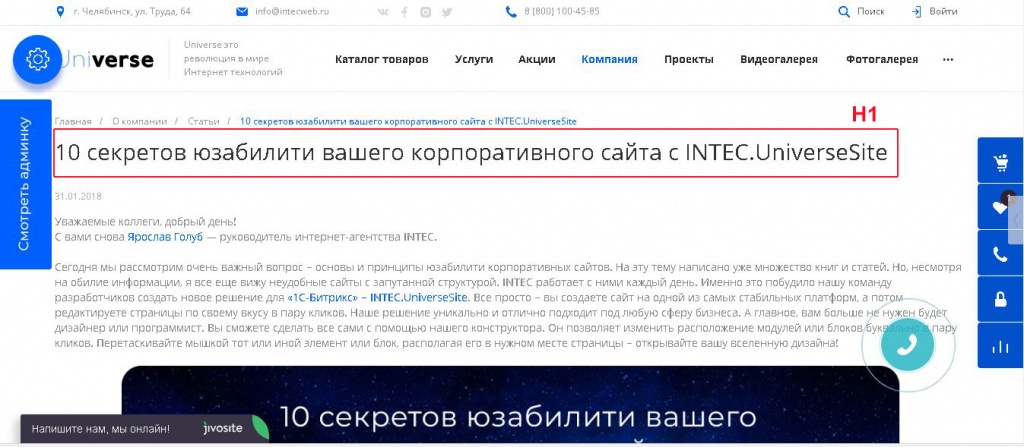
Proper use of subheadings can improve text information's readability. Headings make it possible to identify the beginning of a new section or subsection on a web page. Thus, the content is structured, and it is determined how the web page's content corresponds to the designated keywords.
In the next article, we will discuss other promotion features. Don't miss it!