I continue to talk about how to make friends between your online store and search engines.
6. Use alt tags wisely
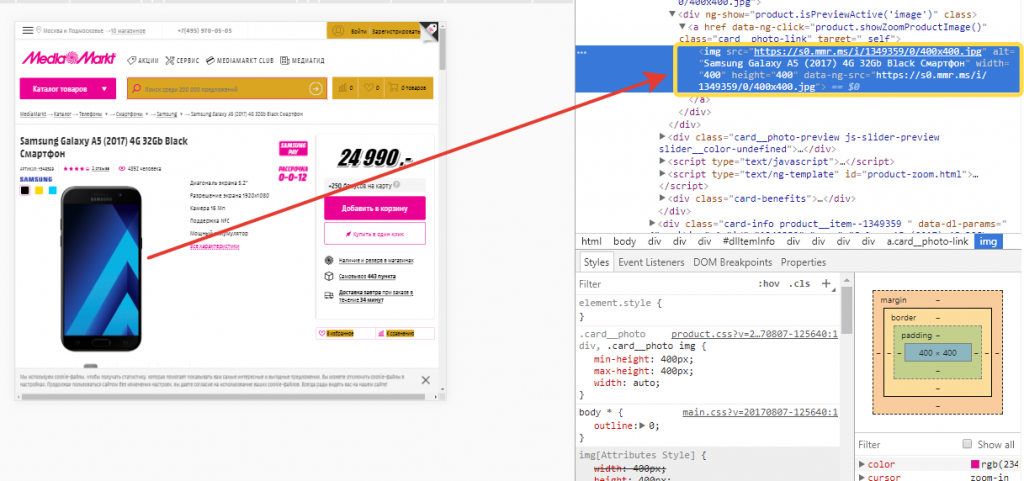
Alt tags for images provide additional information to both site users and search engines. The description of the alt tag pops up when for some reason the image is not displayed (for example, it is disabled in the web browser settings). Thus, visitors become aware of which picture you attached to the text.
Alt tags are also a convenient way to describe your content to search engines. If possible, you can even insert keywords there. It's important to make sure your description matches the image. Some people make the mistake of inserting keywords into an alt tag that is not related to the existing image at all.
People often look for a variety of pictures. If the alt tag is written correctly, your site will be able to get new visitors who will get to the resource by the picture they are interested in.
7. Don't ignore internal links
The clever use of linking is a great way to engage visitors. For example, you have a couple of articles on related topics, it is advisable in each of them to refer (ie provide a link) to another article. This will increase the length of time users stay on the site and will have an impact on rankings.
8. Create your sitemap
In order to understand whether or not a search engine will find every page on your site, you should create an XML sitemap. It will provide faster indexing. The ability to create a file is present in the initial configuration of Bitrix.

9. Use keywords as effectively as possible
The more content there is on a site, the more often key phrases can be used in it. But it is also not advisable to get carried away with keywords, because in this situation the resource will fall under the filter for re-optimization. As practice shows, keywords should be only 2-5% of the total text.
10. Fast page loading
Fast loading pages are not only convenient for impatient users. Search engines also “treat” it well, which, having fixed the site’s fast loading, increase its position in the search results.
So don't forget to test your pages to make sure that images, text and all content load as quickly as possible. It will also be necessary to work on replacing or removing content that slows down pages. Don't forget to optimize your CSS and Java-Script to speed up the loading of your resource.
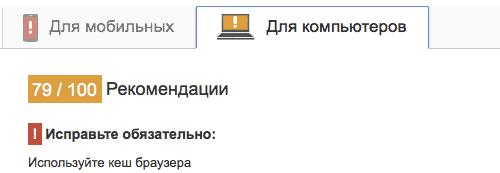
There is a for evaluating page load speed from Google. It shows a value between 0 and 100 for both computers and mobile devices. It will also be necessary to work on replacing or removing content that slows down pages. Do not forget about optimizing your CSS and Java-Script, working with which it is possible to speed up the loading of your resource.
Follow these rules of internal SEO optimization, and you will definitely succeed in creating an interesting site for users with good navigation and high positions in the SERP. All of the above tips are easy to implement. And they will prove their effectiveness very quickly.
What SEO tricks do you use? Tell us about your experience!